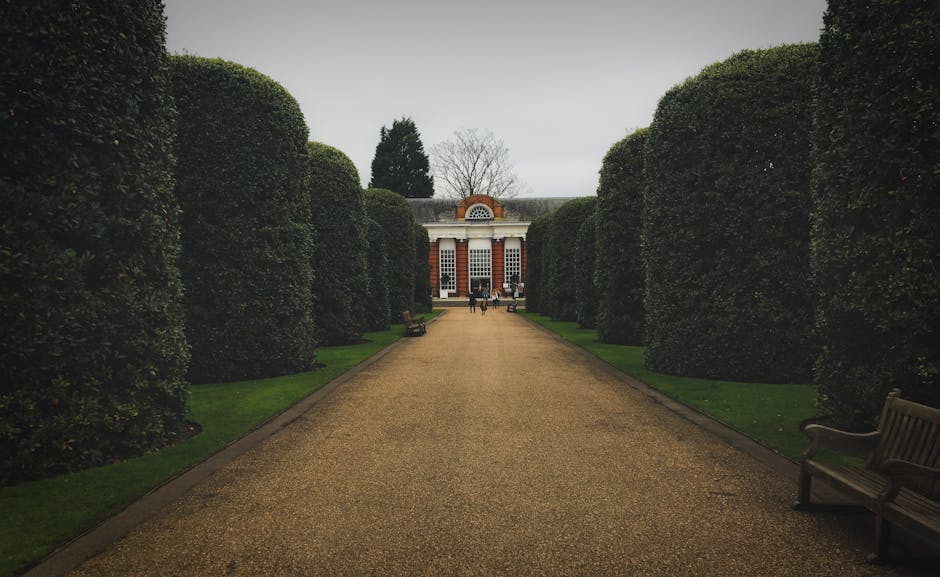
Top gardeners near Richmond Park for large private grounds

If you manage a large garden near Richmond Park, you already know it is not the sort of space you can "just tidy up at the weekend". These grounds need planning, regular attention, specialist equipment, and a team that understands how to keep everything looking composed without creating chaos in the process. The best gardeners near Richmond Park for large private grounds do more than mow lawns or trim hedges. They help preserve structure, improve safety, and keep the whole estate feeling calm, cared for, and properly finished.
Whether you are looking after a private home, a substantial rental property, or a garden with mature trees, layered borders, long runs of hedge, and multiple outdoor features, the right gardener makes a very real difference. In this guide, we'll walk through what to look for, how large-ground garden care works, what good service looks like, and where people often go wrong. It's practical stuff. No fluff.
One small reality check: a large private ground near Richmond Park can look deceptively simple from a distance. Up close, though? There is usually a lot going on.
Why Top gardeners near Richmond Park for large private grounds Matters
Large grounds need a different kind of care from a standard domestic garden. A small back garden can usually be managed with one mower, a few hand tools, and a couple of spare hours. A broad private plot near Richmond Park is another matter altogether. You may have formal lawns, shrubs that need shaping, mature trees, perimeter hedging, and areas that drift into semi-wild if left too long. That means timing matters, and so does sequence.
The best gardeners bring order to all of that. They look at the whole site, not just the obvious bit in front of the house. In practice, that means asking questions like: Which areas are highest priority? What needs weekly attention, and what only needs seasonal work? Are there access problems? Is the garden used for entertaining, children, pets, or quiet retreat? Those details change the plan completely.
There is also a neighbourhood-specific factor. Richmond Park is a highly prized part of London, and many nearby properties have mature planting, long-established features, and an expectation of tasteful, consistent upkeep. The garden usually needs to look good all year, not just when the sun is out and everyone is smiling for a weekend barbecue. Let's face it, a tired hedge line or an overgrown lawn reads very differently when the whole property is otherwise immaculate.
If you are considering broader support, it can also help to review a provider's full services overview so you understand what can be handled as part of one maintenance plan rather than as separate call-outs.
How Top gardeners near Richmond Park for large private grounds Works
Good large-ground gardening usually starts with a site assessment. Not a rushed look round. A proper walk-through. The gardener or team should understand the size of the land, the condition of each area, drainage quirks, slope, shade, access gates, hardstanding for vehicles, and any delicate planting that needs a softer touch. On bigger sites, these little things save time and prevent damage.
From there, work is typically divided into routine and periodic tasks. Routine tasks might include mowing, edging, light pruning, border care, leaf clearance, and general tidying. Periodic tasks tend to be more seasonal: hedge reductions, tree work, garden clearance, replanting, pressure on overgrown areas, or refreshing tired sections of the grounds. A decent gardener will know the difference and schedule accordingly rather than trying to do everything at once.
For many large properties, the most practical arrangement is a maintenance plan with defined visits. That might mean weekly, fortnightly, or monthly attention depending on the scale and speed of growth. In spring and early summer, gardens can seem to race ahead overnight. In autumn, leaves arrive almost like an ambush. Then winter arrives and shows every forgotten edge. You know the feeling.
Specialist services often sit alongside routine maintenance. For example, a mature hedge line may need careful shaping through hedge trimming, while a woodland edge or storm-damaged tree may require tree lopping and removal. If the site has become congested or neglected, a one-off garden clearance can reset the space before ongoing care begins.
And yes, the best teams think about disposal, access, and reinstating the site once the work is done. Not just the headline task. That part matters more than people realise.
Key Benefits and Practical Advantages
There is a straightforward reason people seek out the top gardeners near Richmond Park for large private grounds: the right support makes the estate easier to live with. But the benefits are not just cosmetic.
- Consistency: Large gardens can look tidy one week and wild the next. Regular professional care keeps a stable baseline.
- Better plant health: Pruning, mowing, feeding, and seasonal timing all affect how well the garden grows over time.
- Safer outdoor spaces: Overgrown paths, low branches, and uneven growth can become hazards if left unchecked.
- Time savings: A big plot eats weekends. Fast. Outsourcing frees you from constant catch-up work.
- Better presentation: For private residences, letting agents, or guest-facing homes, first impressions really do matter.
- Long-term value: Good maintenance protects planting, surfaces, and features so they last longer.
There is another advantage that tends to be overlooked: peace of mind. When a team knows the site, the work becomes less disruptive. They learn where the fragile borders are, how the soil behaves after rain, and which areas need quiet attention rather than heavy-handed treatment. That familiarity is worth paying for.
If your grounds include lawns as a central feature, a specialist lawn mowing service can keep stripes, height, and edges consistent without the patchy look that appears when maintenance is done in a rush.
Who This Is For and When It Makes Sense
This kind of service is not only for large houses with formal gardens. It is for anyone dealing with ground that is too extensive, too complex, or too important to leave to chance.
It makes sense if you are responsible for:
- a substantial private residence
- a home with mature planting and multiple lawn areas
- a property with hedges, trees, terraces, and borders all needing different care
- a let property where presentation affects value and tenant expectations
- a house used for entertaining or regular family gatherings
- grounds that have been neglected and need a proper reset before ongoing care
It also makes sense when you know the garden has outgrown your own capacity. That can happen gradually. First you miss one hedge trim. Then leaf season arrives. Then a wet month puts everything behind. Before long, the garden is not quite disastrous, but it is forever asking for attention. A professional gardener brings the whole thing back under control.
Truth be told, many people wait too long. They keep hoping they will "get on top of it next month". Next month is a slippery little thing.
Step-by-Step Guidance
If you are hiring for large private grounds near Richmond Park, a sensible process usually looks like this.
- Define the scope. Walk the site and note what needs regular care, what needs seasonal work, and what is currently causing the most pressure.
- List priorities. For example, lawns and access routes may matter more than ornamental borders in the first round.
- Ask how the team works. Find out whether they use fixed schedules, ad hoc visits, or a maintenance plan.
- Check capability. Can they handle hedges, tree work, clearance, planting, and ongoing upkeep? A garden like this often needs more than one skill set.
- Clarify waste removal. Green waste and cuttings can build up fast on bigger sites, so disposal should be discussed early.
- Agree communication. A quick update after each visit is helpful, especially if the property is not occupied full-time.
- Review after the first visit. A good service should improve the site immediately, but the real test is whether the plan becomes smoother over the following weeks.
For some properties, it helps to combine maintenance with larger improvements. A tired side area may need landscaping, while a terrace edge or seating area might benefit from decking services to make the garden more usable and easier to maintain. You do not need to reinvent the whole place. Often, a few smart changes do the heavy lifting.
Expert Tips for Better Results
Here is the sort of advice that tends to save time, money, and a fair bit of frustration.
1. Start with structure, not decoration
If a garden is too large to manage comfortably, focus first on the bones of it: lawn, hedge lines, access paths, trees, and main sightlines. Decorative planting is easier to enjoy once the framework is under control.
2. Think in seasons, not just visits
Spring growth, summer maintenance, autumn clearance, and winter pruning all behave differently. A good gardener should plan with the year in mind, not just the next appointment.
3. Be realistic about access
Long drives, side gates, narrow paths, or protected surfaces affect what equipment can be used. Mention these early. It sounds obvious, but people often forget until the first van arrives and someone says, "Ah, that's a tight one."
4. Ask for a maintenance rhythm
On large grounds, the work often goes best when there is a rhythm to it. Repeated regular visits are usually better than occasional heroic efforts. Heroic efforts are dramatic. They are also exhausting.
5. Keep an eye on weak spots
Shady corners, damp borders, and heavily used lawn areas will often need extra attention. Those are the places where problems start quietly.
If sustainability matters to you, it is worth asking how cuttings, arisings, and green waste are handled. A provider with a sensible approach to recycling and disposal can reduce mess and keep the project tidier from day one.
Common Mistakes to Avoid
Large private grounds look impressive, but they can also encourage bad decisions if you are not careful.
- Choosing on price alone: Cheap can become expensive if the team cannot cope with the size or complexity of the site.
- Underestimating the work involved: A three-acre garden is not just "a bigger version" of a normal garden. It needs a different approach.
- Skipping the site walk-through: Without seeing the land properly, a gardener may miss access issues or vulnerable features.
- Forgetting about tree and hedge cycles: These are not optional extras; they are often the backbone of the whole garden's appearance.
- Ignoring waste removal and storage: Cuttings pile up fast. Really fast.
- Not asking what happens between visits: If the garden grows quickly, the time gap between services matters almost as much as the service itself.
Another common mistake is assuming every gardening company can handle large private grounds in the same way. They can't. Some are brilliant at smaller domestic maintenance, but the scale, scheduling, and equipment needs for bigger grounds are different. No shame in that. It just means you need the right fit.
Tools, Resources and Recommendations
You do not need to become a gardening technician yourself, but it helps to understand the main tools and service types typically used on larger sites.
| Need | Typical approach | Why it matters on large grounds |
|---|---|---|
| Lawns | Regular mowing, edging, and seasonal care | Consistency keeps the property looking managed rather than overworked |
| Hedges | Scheduled shaping and reduction where needed | Hedges define boundaries and sightlines, so they quickly affect the whole look |
| Trees | Inspection, pruning, or removal by suitably experienced teams | Mature trees can influence safety, light, and access |
| Overgrowth | Clearance and reset before routine upkeep | Useful where the site has slipped behind or changed hands |
| Site improvements | Landscaping or structural additions | Helps make a big garden easier to use and maintain |
For many properties, the most helpful starting point is a simple combination of maintenance and targeted improvements. A structured garden maintenance plan keeps the basics under control, while landscape gardening can improve layout, flow, and long-term usability. If you are not sure what is needed, that pairing is often a sensible place to begin.
And if you want to understand service scope, practical next steps, and the kinds of support available, the services overview is a useful place to start. It helps you compare what is routine, what is specialist, and what may need a one-off intervention.
Law, Compliance, Standards and Best Practice
For large private grounds, compliance is usually less about dramatic legal complexity and more about doing things properly, safely, and with care. That said, there are a few important areas to pay attention to.
Health and safety: Large sites can involve powered tools, ladders, uneven ground, tree work, and moving vehicles. A responsible contractor should work with clear safety procedures and sensible site awareness. If you want to understand how a provider approaches this, their health and safety policy and insurance and safety information should give you a useful sense of their standards.
Tree work: Any tree lopping or removal should be approached carefully and, where relevant, in line with standard UK arboricultural practice. Mature trees near Richmond Park can matter aesthetically as well as structurally, so experience counts.
Waste handling: Green waste should be managed responsibly. Good practice means tidy removal, sensible recycling where possible, and not leaving the site looking as if a storm has just passed through.
Contract clarity: Scope, frequency, access, payment terms, and responsibility for waste or materials should be set out clearly. It is not glamorous, but it avoids awkwardness later.
If you prefer to review business terms before getting started, the pages on terms and conditions, payment and security, and privacy policy can help set expectations in plain English.
Options, Methods, or Comparison Table
Not every large garden needs the same kind of support. The right choice depends on how the grounds are used, how quickly they grow, and how much presentation matters.
| Option | Best for | Pros | Trade-offs |
|---|---|---|---|
| Weekly maintenance | Fast-growing or highly visible grounds | Consistent appearance, fewer catch-up jobs | Higher ongoing commitment |
| Fortnightly visits | Balanced upkeep for many private gardens | Good control without over-servicing | May need extra seasonal work |
| Monthly visits | Slower-growth gardens or lower-use areas | Lower routine cost | Less suitable for high-growth summer periods |
| One-off clearance | Neglected or inherited grounds | Fast reset and clean slate | Needs ongoing care afterwards |
| Combined maintenance and landscaping | Grounds needing improvement as well as upkeep | Better long-term usability and presentation | Takes planning and usually a bigger initial commitment |
For many Richmond Park area properties, a blended approach works best: regular maintenance for the essentials, plus seasonal clearance or improvement work when needed. That keeps the garden looking like it is being looked after, not merely visited.
Case Study or Real-World Example
Imagine a large private garden just a short drive from Richmond Park. It has a central lawn, mature hedging along the boundary, a few overgrown side beds, and a rear area that has slowly become a dumping ground for fallen branches, old pots, and a bit of everything nobody meant to leave there.
The first visit is not about perfection. It is about reclaiming the space. The team starts with clearance, lifts the clutter, tidies the rougher growth, and defines the edges again. The lawn is brought back under control. The hedges are shaped so the whole plot feels taller, sharper, and more intentional. Then, after the reset, maintenance becomes easier. Much easier.
By the third visit, the garden no longer feels like it is shouting for help. It feels managed. There's a big difference. And the owner gets that slightly surprising moment of walking outside with a coffee in the morning and thinking, "Ah, that looks calm again." That matters, especially in a busy household.
That sort of result usually comes from combining garden clearance, hedge trimming, and ongoing lawn mowing rather than trying to fix everything in one heroic afternoon.
Practical Checklist
Before you hire a gardener for large private grounds near Richmond Park, run through this checklist.
- Have I clearly defined the size and complexity of the site?
- Do I know which areas need weekly, seasonal, or one-off attention?
- Have I asked about access, parking, and equipment requirements?
- Is waste removal included or clearly discussed?
- Have I checked that the team can handle hedges, lawns, trees, and clearance if needed?
- Do I understand how often the garden will be visited?
- Has the contractor explained any safety or insurance considerations?
- Am I comfortable with the communication process after visits?
- Have I thought about whether landscaping improvements would help long term?
- Do I know what a realistic first month of work should look like?
If you can answer most of those comfortably, you are in a much better position than many people who just start with "Can you come and have a look?". That can work, of course. But a little clarity upfront saves everyone time.
Conclusion
Finding the top gardeners near Richmond Park for large private grounds is really about fit. The best team will understand scale, timing, presentation, safety, and the small details that make a property feel well kept rather than merely maintained. They should be able to handle routine work, seasonal pressure, and the occasional bigger job without making the whole process feel like a project you have to supervise constantly.
For large gardens, the right support is not a luxury. It is what keeps the space enjoyable, usable, and quietly impressive through the seasons. And if the grounds have become more demanding than you expected, that is completely normal. These places grow faster than people think.
Get a free quote today and see how much you can save.
If you are ready to take the next step, start by reviewing the available pricing and quotes information, then explore the team's about us page so you can judge whether their approach feels right for a property of this size. A good garden service should leave you feeling lighter, not busier. That is the goal.
Frequently Asked Questions
What should I look for in gardeners near Richmond Park for large private grounds?
Look for experience with bigger sites, confidence with hedges, lawns, trees, and clearance, and a clear maintenance plan. On large grounds, organisation matters just as much as skill with tools.
How often should a large private garden be maintained?
It depends on the planting, lawn size, and how formal the garden is. Many properties benefit from weekly or fortnightly visits during the growing season, with seasonal work added as needed.
Is one-off garden clearance enough for an overgrown estate garden?
Usually not. Clearance is a useful reset, but if the site grows quickly or is heavily used, it normally needs follow-up maintenance to keep it under control.
Can one gardening team handle lawns, hedges, and trees?
Sometimes, yes, but not always to the same level of specialism. It is worth checking what the team actually does day to day and whether they are comfortable with the scale of your grounds.
Do I need landscaping as well as garden maintenance?
Not always. But if parts of the garden are hard to use, awkward to maintain, or visually unbalanced, landscaping can improve both appearance and practicality.
How do I know if a gardener is suitable for a large property?
Ask how they would plan the work, how they manage access and waste, and how they prioritise tasks across a bigger site. A good answer usually sounds specific, not generic.
What if my garden has mature trees near the boundary?
Mature trees need careful handling. Depending on the work involved, you may need a team with tree experience and a sensible approach to safety, pruning, and removal.
Are regular maintenance visits better than occasional big jobs?
For most large private grounds, yes. Regular visits keep things stable and prevent the sort of backlog that turns simple upkeep into a major clean-up.
Should I ask about insurance and safety before hiring?
Yes, absolutely. Large gardens often involve tools, height, uneven surfaces, and moving waste, so it is sensible to ask how the work is covered and managed.
What are the most common problems with large private grounds?
The biggest ones are inconsistent upkeep, overgrown hedges, rough lawns, poor access planning, and delays in seasonal work. The good news is that all of these are manageable with the right plan.
How do I get a quote for a large garden near Richmond Park?
Start by sharing the size of the grounds, the main tasks needed, and whether you want a one-off clean-up or ongoing support. A proper quotation should reflect the site rather than a generic price guess.
Where can I learn more about the services available?
A good place to begin is the services overview, which gives a clear picture of what can be included in a maintenance or improvement plan.